EV Fuses vs Traditional Automotive Fuses: What’s the Difference?
As vehicles transition from internal combustion engines (ICE) to electric drivetrains, electrical protection requirements have changed dramatically. One of the most misunderstood components in this shift is the fuse.
At first glance, EV fuses and traditional automotive fuses may look similar, but in reality, they are designed for very different electrical environments. This article explains the key differences and why conventional automotive fuses are not suitable for electric vehicles.
Different Electrical Environments
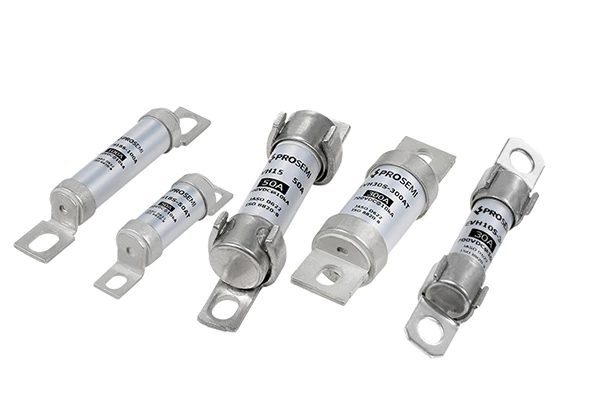
The most fundamental difference lies in the type of electrical system.
Traditional Automotive Systems
- Primarily 12 V or 24 V DC
- Lower fault energy
- Short circuit currents are relatively manageable
Electric Vehicle Systems
- 400 V to 800 V DC (and increasing)
- Extremely high short-circuit energy
- Continuous high-current operation
High-voltage DC systems behave very differently from low-voltage automotive circuits, especially when it comes to arc formation and fault interruption.
Voltage Rating: A Major Divider
Traditional automotive fuses are designed for low-voltage systems and cannot safely interrupt high-voltage DC arcs.
| Feature | EV Fuses | Traditional Automotive Fuses |
|---|---|---|
| Typical Voltage | 400–1000 V DC | 12–32 V DC |
| Arc Suppression | Advanced (sand-filled) | Minimal |
| DC Interruption | Yes | Limited |
Using a low-voltage fuse in an EV system can result in arc sustain, fuse explosion, or fire risk.
Breaking Capacity (Interrupt Rating)
Breaking capacity defines how much fault current a fuse can safely interrupt.
- EV fuses: typically 10 kA to 50 kA+
- Traditional automotive fuses: often below 1 kA
EV battery packs can deliver massive fault currents in milliseconds. Without sufficient breaking capacity, a fuse cannot protect the system effectively.
Fuse Construction and Materials
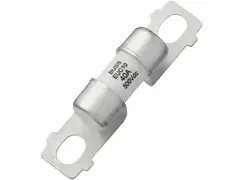
EV Fuses
- Ceramic tube body
- Quartz sand filling
- Designed for high thermal and mechanical stress
Traditional Automotive Fuses
- Plastic or glass body
- Exposed fusible elements
- Optimized for cost and low voltage
The ceramic and sand-filled structure in EV fuses is essential for DC arc quenching and heat dissipation.
Response Characteristics
Different systems require different response speeds.
EV fuses often use:
- Fast-acting designs for power electronics
- Controlled time-delay for inrush currents
Traditional automotive fuses focus on:
- Basic overcurrent protection
- Limited precision in time-current curves
EV applications demand tightly controlled protection behavior to protect expensive semiconductors.
Application Scope
Where EV Fuses Are Used
- Battery packs and BMS
- Inverters and motor drives
- On-board chargers (OBC)
- DC-DC converters
- Fast charging systems
Where Traditional Automotive Fuses Are Used
- Lighting systems
- Infotainment
- Body electronics
- Low-voltage auxiliaries
They are designed for completely different risk levels.
Standards and Compliance
EV fuses must comply with stricter international standards:
- IEC 60269-4
- UL 248-20
- ISO 8820 (EV-specific sections)
Traditional automotive fuses typically follow low-voltage automotive standards and do not meet EV safety requirements.
Why Traditional Automotive Fuses Cannot Replace EV Fuses
Trying to use a conventional automotive fuse in an EV system can lead to:
- Incomplete current interruption
- Sustained DC arcing
- Damage to power electronics
- Serious safety hazards
In EVs, fuse failure is not just a component issue—it is a system-level safety risk.
Final Comparison Summary
| Category | EV Fuses | Traditional Automotive Fuses |
|---|---|---|
| System Voltage | High-voltage DC | Low-voltage DC |
| Breaking Capacity | Very high | Low |
| Arc Control | Advanced | Minimal |
| Structure | Ceramic, sand-filled | Plastic or glass |
| Application | Powertrain & battery | Body electronics |
Final Thoughts
While both are technically “fuses,” EV fuses and traditional automotive fuses serve fundamentally different purposes. As electric vehicles push toward higher voltage platforms and faster charging, specialized EV fuses are essential for safety and reliability.
Choosing the right fuse is not optional—it is a critical design decision in any EV system.