EV Fuses

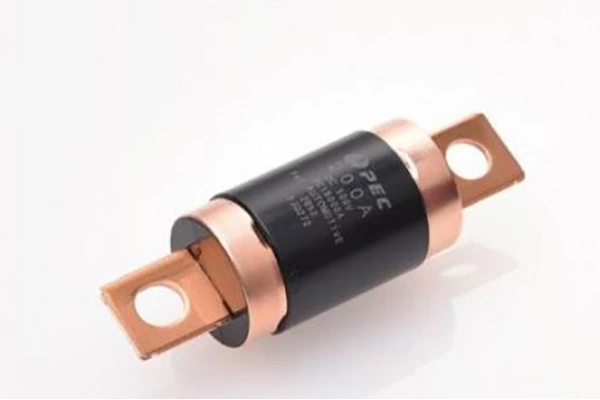
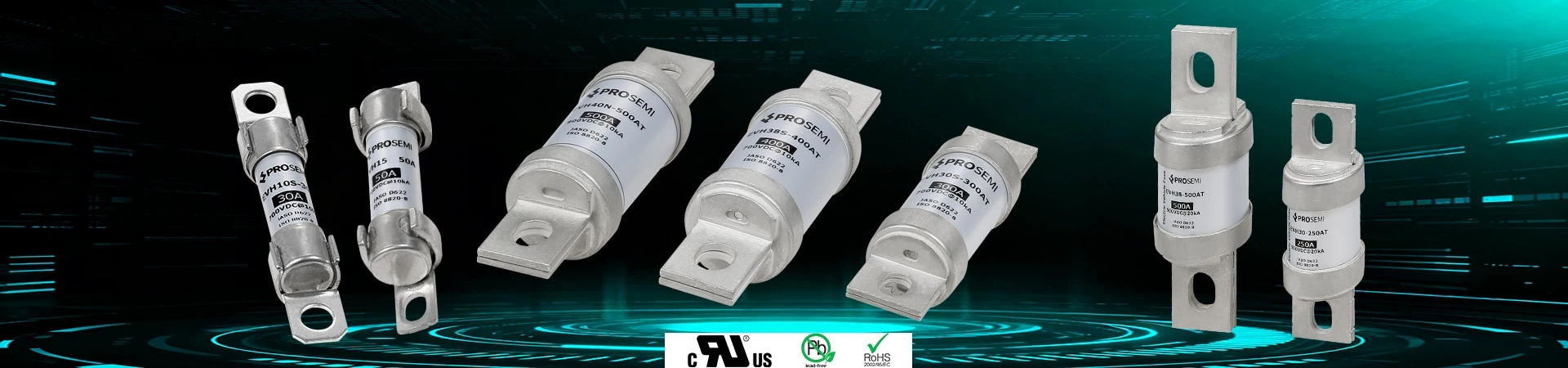
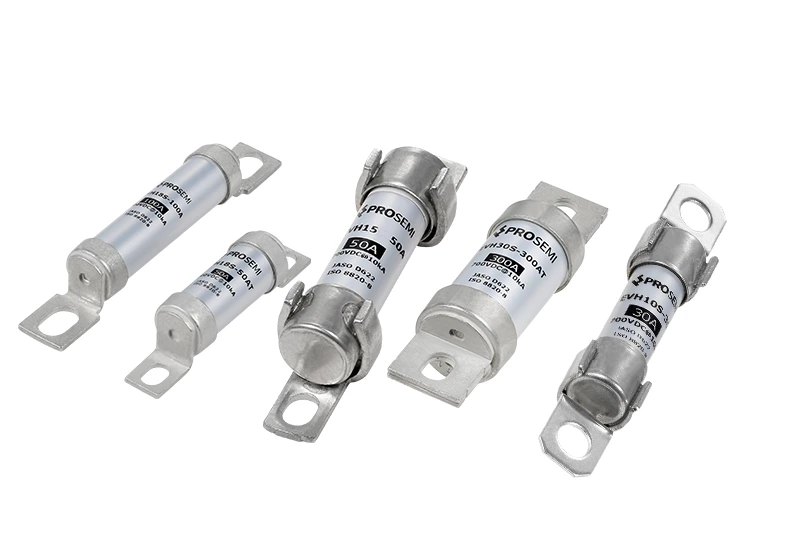
PROSEMI EV fuses are designed to provide reliable overcurrent protection for accessory circuits in electric and hybrid electric vehicles. Their high interrupting ratings ensure safe protection of high-capacity battery systems required for vehicle acceleration and extended driving range.

PROSEMI electric vehicle fuses are available with rated currents from 0.44A to 600A and voltage ratings from 100V to 1000V, providing fast-acting protection for high-energy automotive systems. Common current ratings such as 10A, 15A, 20A, 30A, 50A, 60A, and 100A are stocked to support urgent project requirements, while other configurations are available with standard lead times of approximately 4–8 weeks.

Download the product manual below for detailed electrical specifications, dimensions, and application guidelines. For sample requests, technical consultation, quotations, or fuse cross-reference support, please contact our engineering team.

Download Product Manual Request Samples or Quote
EV Fuses

Features And Benefits

  • Designed to JASO D622 & ISO 8820-8

  • Excellent DC performance

  • Lead free and RoHS compliant

  • High Inrush with standing

  • Resistance to temperature and humidity cycle shock

  • Low watts loss and high durability

Product Application

  • Power Distribution Unit (PDU)

  • Energy storage device

  • Inverters

  • EV & HEV Power Battery

  • DC drives

  • EV Charging module

Related Products

Electric vehicle fuses are critical overcurrent protection components for high-voltage, high-current automotive systems. They are designed to rapidly interrupt fault currents, preventing component damage and reducing the risk of thermal events or fire. Compared with standard industrial fuses, EV fuses offer enhanced resistance to harsh automotive environments, featuring arc-suppression and explosion-proof performance. They are widely used in key EV systems such as traction inverters and battery packs, and must meet stringent requirements for high-precision interruption, long-term reliability, and thermal stability.

Part number Interrupting Rating Voltage Rating (V) Ampere Rating (A) Typical Cold Resistance (mΩ) Typical Melting I²t (A²Sec) Dimension (mm) 1.0In Power loss (W) Automotive Datasheets
ESJ10-75A 1000Vdc@50kA 1000VDC 75 - - 18x68mm 16 No
ESJ10-80A 1000Vdc@50kA 1000VDC 80 - - 18x68mm 17 No
ESJ10-100A 1000Vdc@50kA 1000VDC 100 - 10200 30x65mm 16 No
ESJ10-125A 1000Vdc@50kA 1000VDC 125 - 15500 30x65mm 22 No
ESJ10-160A 1000Vdc@50kA 1000VDC 160 - 28000 30x65mm 30 No
ESJ10-200A 1000Vdc@50kA 1000VDC 200 - 40100 30x65mm 36 No
ESJ10-250A 1000Vdc@50kA 1000VDC 250 - 52000 38x70mm(single) - No
ESJ10-315A 1000Vdc@50kA 1000VDC 315 - 77000 38x70mm(single) - No
ESJ10-350A 1000Vdc@50kA 1000VDC 350 - 100000 38x70mm(single) - No
ESJ10-400A A 1000Vdc@50kA 1000VDC 400 - 1000VDC 38x70mm(double) - No
ESJ10-500A 1000Vdc@50kA 1000VDC 500 - 190000 38x70mm(double) - No
ESJ10-600A 1000Vdc@50kA 1000VDC 600 - 320000 38x70mm(double) - No

Frequently Asked Questions

How Do I Select The Correct Fuse Rating?

A: When selecting a electric vehicle fuses fuse, both the rated voltage and rated current must be carefully considered to ensure safe and reliable operation.

(1) Selecting the Rated Voltage The rated voltage of a fuse is the maximum voltage at which it can safely interrupt a circuit.

①The fuse’s rated voltage must be equal to or higher than the circuit’s operating voltage.
②A fuse with a lower voltage rating than the circuit voltage must never be used.

Example:

①A 3A / 125V fuse cannot be used in a 250V circuit.
②A 3A / 250V fuse can be safely used in both 125V and 250V circuits.

(2)Selecting the Rated Current

The rated current of a fuse should be selected based on the circuit’s normal operating current and operating conditions.

Key factors to consider include: Normal operating current (Irm), Ambient temperature and derating factors, Inrush or surge current (I²t value), Expected number of current surges during product lifetime

A commonly used calculation method is:

In ≥ Irm / (Sc × Tc), Where: In = Rated current of the fuse
Irm = Maximum normal operating current of the circuit
Sc = Safety derating factor
0.75 (UL standard)
0.9 (IEC standard)
0.85 (JIS standard)
Tc = Temperature derating factor (refer to the fuse’s temperature derating curve)

The selected fuse rating should always be equal to or higher than the calculated value to ensure reliable operation and avoid nuisance blowing.

Summary:

①Choose a rated voltage ≥ circuit voltage
②Calculate rated current based on operating current, temperature, and safety factors
③Consider inrush current and application conditions
④Select the nearest higher standard fuse rating for reliable performance
A: Applications of EV Fuses:

EV fuses are primarily used to protect the main and auxiliary circuits in high-voltage electrical systems of electric vehicles. Key application scenarios include:

1.Traction Battery Packs: Protect the main battery pack and sensing circuits from overcurrent and short circuits, preventing thermal runaway.

2.Traction Inverters: Ensure current safety in motor drive circuits, preventing overload damage to inverter modules.

3.DC/DC Converters: Safeguard high-to-low voltage conversion circuits, preventing damage from instantaneous high currents.

4.On-Board Chargers (OBC) and DC Fast Charging Modules: Protect current flow during charging and prevent overcurrent during the charging process.

5.Auxiliary Power Systems: Protect high-voltage circuits for components such as electric air conditioning compressors, PTC heaters, electric power steering (EPS), and seat or windshield defroster heaters.

A:EV Fuses: Overcurrent protection devices designed for 100–1000 V high-voltage, high-current circuits in electric vehicles, protecting key components such as traction batteries and inverters. They quickly interrupt faults to prevent fire and thermal runaway.

Difference from Standard Automotive Fuses: EV fuses are engineered for high-voltage, high-current applications, featuring arc-resistant and explosion-proof designs and resistance to harsh operating conditions. Standard automotive fuses are intended for 12 V/24 V low-voltage, low-current circuits and do not include specialized safety features.

High-Voltage System Role vs. Conventional Fuses: EV fuses serve as a safety barrier in high-voltage circuits, accurately interrupting fault currents and extinguishing arcs. Conventional fuses, when exposed to high voltage, can sustain arcs that may lead to fire and lack sufficient current-carrying capacity and environmental tolerance.

A: The operating temperature range of our EV fuses is -40°C to 125°C.

A: The interrupting ratings of our EV fuses are 20 kA, 30 kA, 33 kA, and 50 kA.

A: Yes, our fuses can be cross-referenced with equivalent fuse models from leading manufacturers including Eaton, Bussmann, Mersen, Littelfuse, Edison, and SIBA. Compatibility should be verified based on electrical ratings and application requirements.

A: Our Electric vehicle fuses are available in multiple industry-standard package sizes to support a wide range of circuit designs and power requirements.

Available package sizes include: 10x38mm, 14x40mm, 18x68mm, 10x28.5mm (max), 30x65mm, 38x70mm Voltage ratings include: 100 VDC, 200 VDC, 250 VDC, 420 VDC, 500 VDC, 750 VDC, 800 VDC, Up to 1000 VAC / DC

These options allow engineers to select the appropriate fuse based on system voltage, space constraints, and application requirements, ensuring safe and reliable overcurrent protection across a wide range of EV & HEV Power Battery designs.

A: Yes. Our Electric vehicle fuses comply with major international safety and environmental standards. They are UL certified and manufactured using lead-free materials, meeting RoHS compliance requirements.

These certifications ensure that our Electric vehicle fuses meet recognized safety, reliability, and environmental standards, making them suitable for use in a wide range of global EV Charging module and EV & HEV Power Battery applications.

Relevant Cases

Selection And Application Guide Of Ev Fuses Electric Vehicle Fuses

introduction In the electric vehicle (EV) industry, fuses are crucial safety pro...

Complete Guide To Selection And Application Of Chip Fuses

introduction With the continuous miniaturization and improvement of integration ...

Brick Fuses High performance Industrial Fuses Selection And Application Guide

Introduction In modern electrical systems, Brick Fuses (module fuses) have becom...

Fuses vs Circuit Breakers: What’s the Difference?

In any electrical system—whether it's in your home, an industrial plant, or insi...
About Us

PROSEMI TECHNOLOGY

Prosemi Technology, as a leading company in the field of precision current sensing components, is dedicated to providing customers with high-performance and high-reliability solutions. Our precision alloy current-sensing resistors, including SMD chip resistors and shunt resistors, are designed for a variety of applications, helping your products achieve accurate current detection and efficient energy management.

High-Quality Products

High-Quality Products

We provide a wide range of outstanding electronic components that are integral to countless applications. Every product is a result of state-of-the-art technology combined with stringent quality control processes to ensure reliability and performance.
Competitive Advantages

Competitive Advantages

Enjoy exclusive access to competitively priced products along with ongoing support and training from our dedicated team. We help you stay ahead by keeping you updated with the latest trends and technology advancements within the industry.
Prompt and Reliable Delivery

Prompt and Reliable Delivery

With our streamlined supply chain and logistics expertise, you receive all products on time, maintaining the highest level of customer satisfaction and trust.

PROSEMI TECHNOLOGY

SEND A MESSAGE

Feel free to fill out our contact form below and our support team will get back to you within 24 hours.

This site uses cookies

We use cookies to collect information about how you use this site. We use this information to make the website work as well as possible and improve our services.more details