Ceramic Cartridge Fuses Selection Guide: Ratings, Types & Uses
Ceramic cartridge fuses are widely used in industrial, automotive, and power electronics systems where high breaking capacity and reliable overcurrent protection are required. Selecting the right ceramic cartridge fuse is critical for ensuring system safety, preventing equipment damage, and maintaining long-term reliability.
This guide explains how to choose ceramic cartridge fuses based on ratings, types, and real-world applications.
What Are Ceramic Cartridge Fuses?
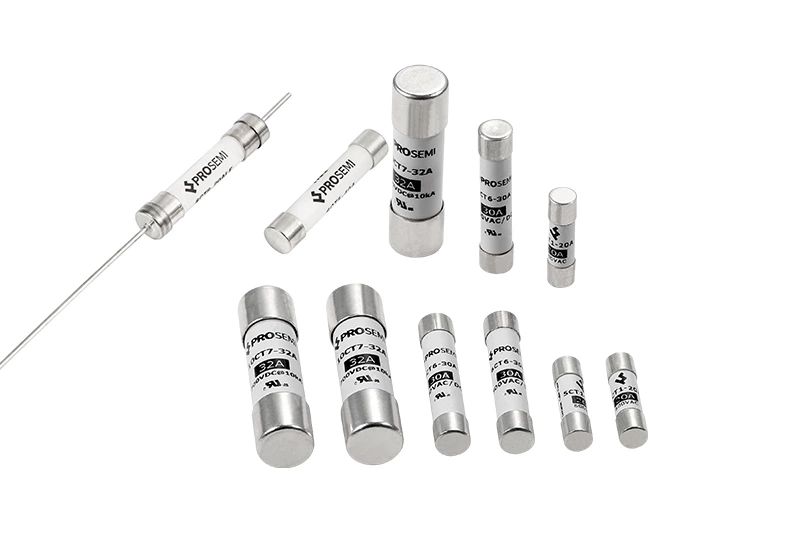
Ceramic cartridge fuses are cylindrical fuses with a ceramic body designed to withstand high temperatures and safely interrupt high fault currents. Unlike glass fuses, ceramic cartridge fuses are typically filled with arc-quenching material, allowing them to handle severe short-circuit conditions.
Key advantages of ceramic cartridge fuses include:
- High breaking capacity
- Excellent thermal resistance
- Enhanced safety in high-power applications
Key Ratings to Consider When Selecting Ceramic Cartridge Fuses
Choosing the correct fuse requires more than matching the current rating. Below are the most important parameters to evaluate.
Rated Current (In)
The rated current defines the maximum continuous current the fuse can carry without opening.
Selection tips:
- Fuse rating should generally be 125%–150% of normal operating current
- Consider ambient temperature and airflow
- Avoid undersizing, which may cause nuisance blowing
Rated Voltage
The rated voltage indicates the maximum system voltage the fuse can safely interrupt.
Common ratings include:
- 250 V AC
- 500 V AC/DC
- 600 V AC/DC and above
Always ensure the fuse voltage rating is equal to or higher than the system voltage.
Breaking Capacity (Interrupt Rating)
Breaking capacity is one of the most critical reasons to choose ceramic cartridge fuses.
- Ceramic cartridge fuses offer high breaking capacity, often several kA
- Essential for systems with high prospective short-circuit current
- Strongly recommended for industrial power and energy storage systems
Time-Current Characteristics
Ceramic cartridge fuses are available in different response speeds:
- Fast-acting (F): Sensitive electronics, semiconductor protection
- Time-delay (T / Slow-blow): Motors, transformers, inrush-current applications
Selecting the wrong time characteristic can result in either nuisance trips or insufficient protection.
Types of Ceramic Cartridge Fuses
Ceramic cartridge fuses can be classified by construction and standards.
By Physical Size
- 5 × 20 mm
- 6.3 × 32 mm
- Industrial cylindrical formats
By Standards
- IEC / EN compliant fuses
- UL-listed fuses
By Application Design
- General-purpose ceramic cartridge fuses
- High-breaking-capacity (HBC) fuses
- Automotive-grade ceramic fuses
Typical Applications of Ceramic Cartridge Fuses
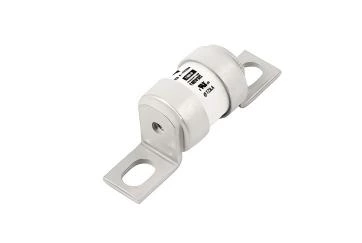
Ceramic cartridge fuses are commonly used in:
- Industrial power supplies
- Battery management systems (BMS)
- EV charging equipment
- Energy storage systems
- Motor drives and automation equipment
These applications demand stable performance under thermal cycling and high fault currents—conditions where ceramic cartridge fuses outperform glass alternatives.
Common Mistakes to Avoid
- Selecting current rating without margin
- Ignoring DC voltage requirements
- Using fast-acting fuses in high inrush applications
- Choosing glass fuses where ceramic cartridge fuses are required
Avoiding these mistakes can significantly improve system reliability and safety.
Final Thoughts
Ceramic cartridge fuses play a critical role in protecting modern electrical and electronic systems. By carefully considering current rating, voltage, breaking capacity, and application requirements, engineers can select the optimal ceramic cartridge fuse for long-term performance and safety.
If you need assistance selecting ceramic cartridge fuses for a specific application, contact us for technical support and recommendations.